
Confessions of a people-pleasing HR Business Partner
 Eva Lorentzon
27 April 2026
Eva Lorentzon
27 April 2026
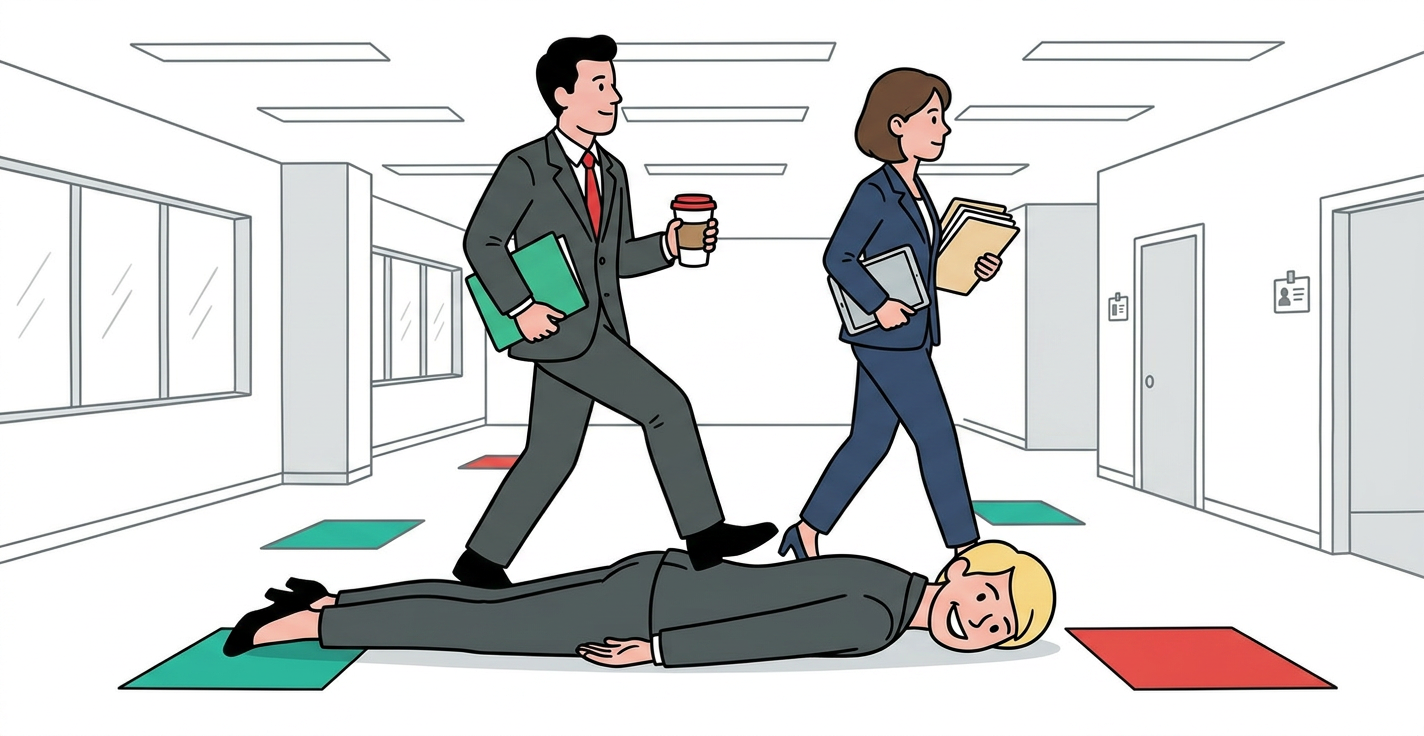
I was facilitating one of Tuff’s training programmes for HR professionals recently and as I saw the participants struggling, I was reminded of my own challenges during the many years I worked in various HR roles during my career. It was during my time as a HR Business Partner that my pitfalls were at their strongest.
Part of my role was of course to be a HR expert and to drive impact in the organisation. But looking back I can clearly see that I had all sorts of reactive tendencies that really got in the way of this that I was totally blind to at the time.
I’ve always prided myself on being helpful, available, eager to contribute. On the surface, that sounds exactly how you would want someone to be in HR, right? But if I’m honest, a lot of it was driven by a need to be liked. And when that is the underlying driver, something shifts. Instead of helpful, I became overly accommodating. My desire to be available turned into a lack of boundaries. My longing to contribute became unsustainable people-pleasing.
When I came to distinguish this pitfall, I gave it a name. An ugly name, in fact. The Door Mat. If I am in my Door Mat pitfall, I become unclear, overly accommodating, hesitant to challenge anyone or anything, reluctant to say no to every single request that comes in.
In short, I became a version of HR that didn’t really stand for anything.
I was invited into conversations, people appreciated my efforts, and I was well-liked. But I wasn’t creating real impact. It was a painful realisation to see that despite all my hard work, I was not getting the results I hoped for.
And it was hard to imagine what the alternative might be. Should I stop being helpful, then? Can I no longer be empathetic or supportive, do I need to be more tough? Do I have to become more cold so I can challenge people?
What I learned is that it’s not about either/or. I can be helpful without becoming a doormat. Supportive whilst also setting boundaries. I can be kind and still challenge others. In fact, I discovered that niceness is not the same as kindness.
My years as a Tuff trainer developing myself and also supporting other HR professionals to the same has taught me this: having impact in HR doesn’t come from being the most liked person in the room.
It comes from:
Having an adult-adult mindset and way of being
Being clear with what is in my role and what is not
Standing for my expertise AND listening to others’ input
Challenging and taking risks when it matters
Being open, authentic and myself – not playing a role or trying to be someone who has to have all the answers all the time
…even when all of this is uncomfortable!
So here’s a question to reflect on: where might your strengths be turning into overused patterns? And what is that costing you and the organisation?
Interested to know how Tuff could support you?
Sign up for our regular free webinar ‘Why aren’t our organisations shifting?’
If you’re Sweden-based, check out our special training programme for HR professionals
Or learn more about Tuff’s approach to supporting organisations with their leadership and culture